
Buying a House in Hungary as a German Citizen: What You Should Bear in Mind

If you are planning to buy a house in Hungary as a German citizen, you are treated in the same way as Hungarian nationals as an EU citizen. This means that you may acquire non-agricultural real estate, including residential and commercial property. Legal entities established in Hungary may likewise acquire non-agricultural real estate without restriction […]
The Franchisee’s Right to Compensation by Analogy with Section 89b of the German Commercial Code

It remains an open question whether a franchisee is entitled to compensation under Section 89b of the German Commercial Code (HGB). Based on recent case law, the scope for applying this provision by analogy appears limited. The compensation claim of the franchisee of an unnamed large corporation was dismissed in its entirety (BGH VII ZR […]
Federal Court of Justice: Damages May Be Awarded Even Where a Foreign Currency Loan Is Valid
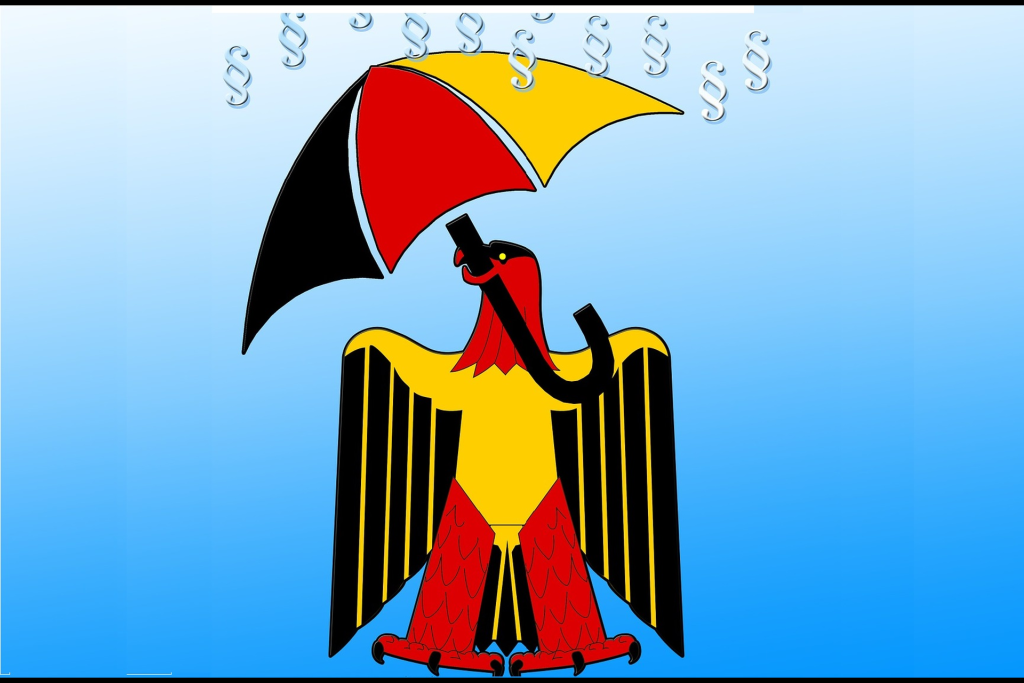
The German Federal Court of Justice (Bundesgerichtshof – BGH) recently published the written grounds of its judgment dated 9 December 2017. According to the judgment, a court must still examine a damages claim brought by a borrower indebted in a foreign currency, even where the underlying loan agreement itself was validly concluded. Before a loan […]
Cheap Company Formation on an Assembly Line?

In recent years, so-called “consultancy firms” operating without legal qualifications have become increasingly common, promising inexpensive and hassle-free company formation services in Germany. Their services typically consist of providing registered office facilities and/or interpreting services to their clients. Although this may sound like self-promotion, we would caution anyone considering such services. Establishing a company is […]
Antitrust Law, with Particular Regard to E-Commerce

One of the particularly interesting decisions of 2017 was undoubtedly the order of the Higher Regional Court of Düsseldorf (OLG Düsseldorf) of 5 April 2017 in the so-called “Asics” case. According to the court, in selective distribution systems a general prohibition imposed on dealers against using price comparison systems infringes antitrust law and is therefore […]
Franchise Law and Standard Terms and Conditions

Franchisors generally use uniform franchise agreements for the purposes of maintaining a consistent distribution system and ensuring equal treatment of franchisees. These agreements therefore constitute standard terms and conditions within the meaning of section 305(1) sentence 1 of the German Civil Code (BGB). To the extent that they are not individually negotiated by the parties, […]
Execution and Certification of Documents under Hungarian Law from Germany

Unlike in most German federal states, lawyers in Hungary generally perform extensive functions comparable to those of notaries. In the course of doing business in Hungary, you will therefore sooner or later require either a document countersigned by a Hungarian lawyer (ügyvédi ellenjegyzés) or a notarised public instrument (közokirat). The good news is that you […]
Landowners in Hungary who are parties to “pocket contracts” face up to five years’ imprisonment and expropriation. Is there a solution?

Until the end of April 2014, EU nationals were, as a rule, also prohibited from acquiring arable land in Hungary, owing to a temporary derogation under EU law. For this reason, foreign purchasers — most often from Austria — frequently entered into so-called “pocket contracts” with Hungarian sellers. In most cases, the parties signed an […]
Personal Liability of Managing Directors in the Insolvency of a German GmbH — Also Applies to German AGs

In the insolvency of a German customer, a supplier and creditor is always faced with the problem that, in the customer’s insolvency proceedings, the supplier will often have to accept a reduction of its claim that varies from case to case and will usually have to be satisfied with an insolvency quota. The supplier’s shortfall […]
Personal Liability of a German GmbH Managing Director in the Event of Insolvency (also applicable to an AG)

A situation frequently encountered by Hungarian suppliers (who later become creditors in insolvency proceedings) is that, after they have performed their contractual obligations, their German business partner files for insolvency. The creditor is then often left with no option but to accept the distribution quota determined by the German insolvency administrator. As a result, substantial […]
 English (UK)
  Magyar
  Deutsch
  Türkçe
  Español
  Català